When I ask patients “what are you doing to prevent pregnancy?” and the reply is “I don’t have sex……often”, that means they aren’t doing anything. A few months later I often get the distressed call (and I mean, distressed) saying “Doc, I am pregnant!!!!!!!!”
There is always a pause. The Doctor in me says “let’s discuss your options”, but my brain (or judgement centre)says “gurlllllll didn’t I warn you.”
So, when I ask “what are you doing to prevent pregnancy?” and you know you’re not ready for pregnancy the correct response is “I am not using anything but what are my options?” That response says I am open to listening and fully understand that SEX+NO CONTRACEPTION=PREGNANCY (wanted or unwanted)!
My next move is to break out into my non-judgemental, evidence based contraceptive spiel. I have worked on this over the years, with many modifications over time. The modifications come about based on any new evidence, availability, affordability and acceptability. And I do say again availability because whatever product your friend/cousin/sister is using in America “WE DON’T HAVE”, what ever is new and cutting edge on google “WE DON’T HAVE. It is what it is! We are a small developing state!”
The research suggests that the long acting reversible contraceptives (LARCS) are more effective and I agree, but selling this idea to our population requires the skill of a new car salesman. I don’t have the space to go into detail about each method here but a quick google search will help. Bet you never thought you would hear a Doctor say that, am I right?
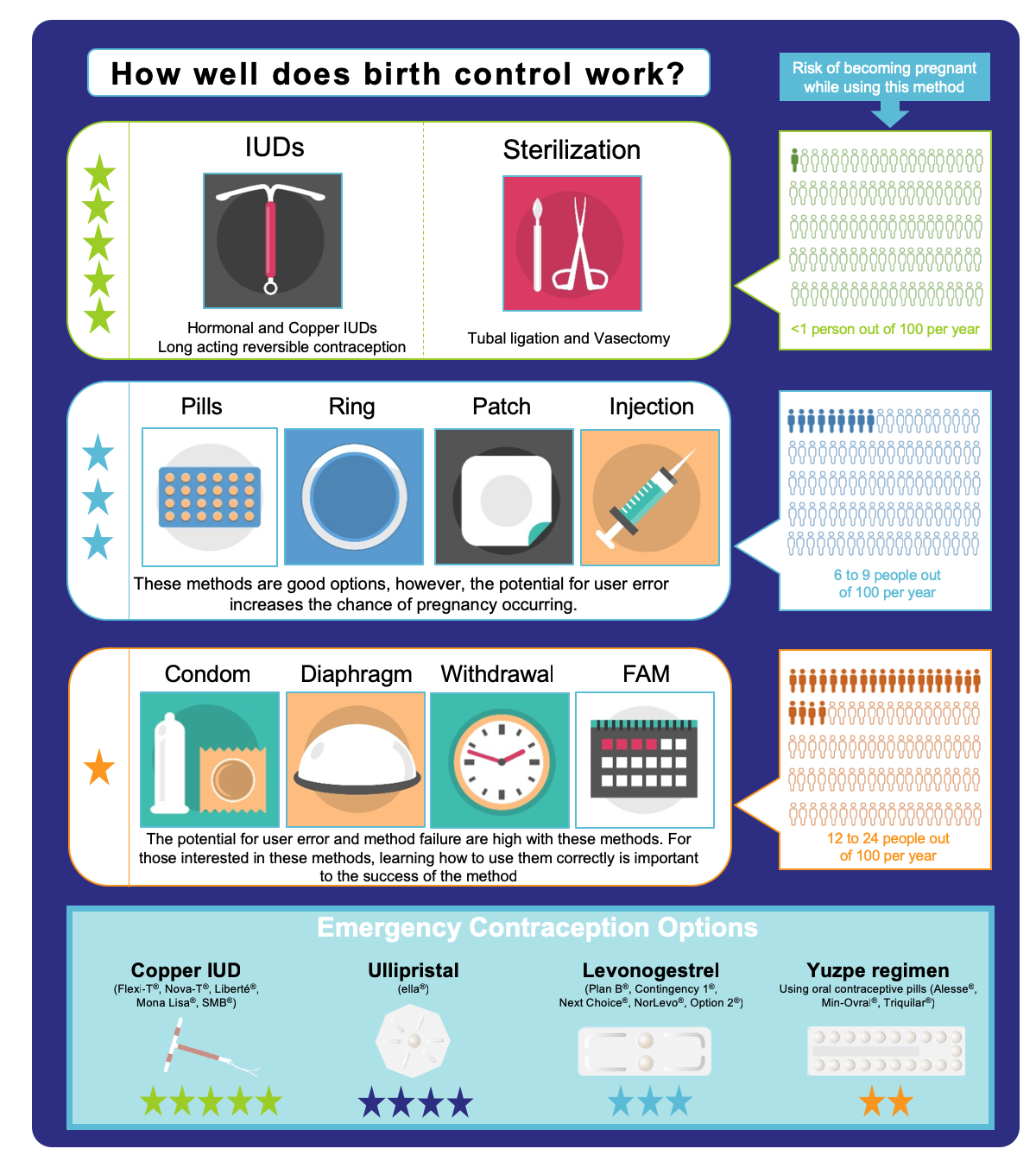
I want you to to be aware of which methods are more effective so you make better choices. Effective is defined as ‘successful in producing a desired or intentional result’. This label is not used to give a particular method a bad rap (people still say that?) because any method used the right way all of the time is very effective. Human behaviour plays a major role because we are more likely to mess up when we have to add a method to our daily routine.
I am big on pictures, this graphic below should explain everything.
In choosing a method of contraception, dual protection from the simultaneous risk for HIV and other STDs should also be considered. Although hormonal contraceptives and IUDs are highly effective at preventing pregnancy, they do not protect against STDs, including HIV. Consistent and correct use of the male latex condom reduces the risk for HIV infection and other STDs, including chlamydial infection, gonococcal infection, and trichomoniasis.
That statement above didn’t sound like me, very prim and proper, that is because it was taken from the Centers for Disease Control and Prevention contraceptive page, but I fully endorsed this statement.